Introduction:
Since its establishment, Israel has been working to expand its geographical borders and consolidate its control not only through military force, but also through settlement power, which complements military force and has proven its effectiveness in achieving sustainable control over the land.
Throughout history, natural resources have been a target for settler capital, and war has been a means to achieve this. There can be no settlement without providing the economic infrastructure for the human capital of the settlement project.
The residents of the settlements adjacent to the western Golan Heights have long desired to occupy the Golan Heights and have pressured the Israeli government, seeing this as an opportunity to expand and increase grazing areas.
During the Six-Day War, on June 8, 1967, the heads of the northern settlements arrived at a meeting of security ministers in Tel Aviv and demanded that a front be opened against the Syrians as well, in order to push the border back. At the meeting, they said: “We cannot continue to live under bombardment.” Defense Minister Moshe Dayan was not pleased, saying that if it was so difficult for the settlements, they should respect themselves and move ten kilometers west. On another occasion, Dayan said, “The kibbutzim want to seize the Syrian Golan Heights, mainly because they covet the vast pasturelands” [1].
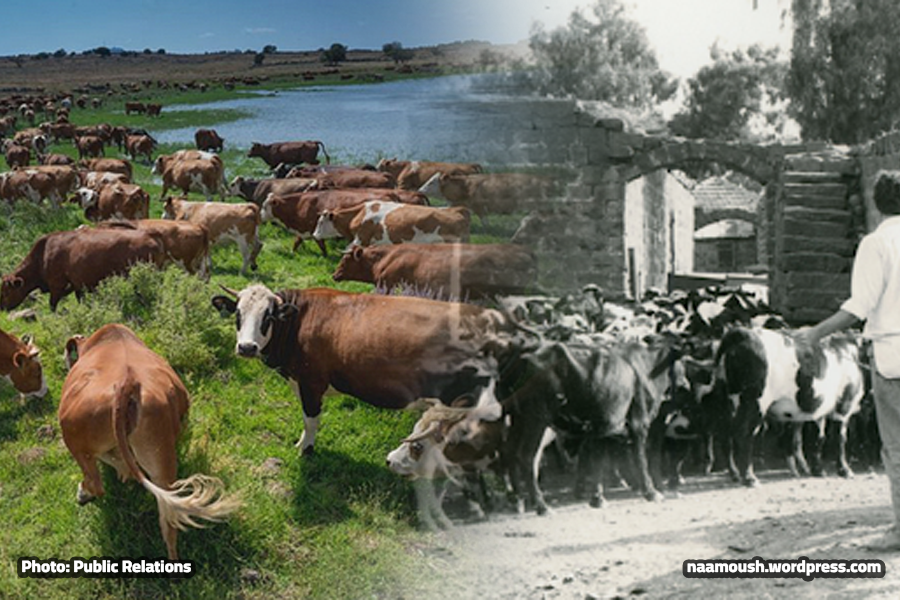
After the war, the settlers’ wishes were fulfilled, as the settlements adjacent to the western Golan Heights seized thousands of dunams of Golan land for grazing purposes. One settler from Kibbutz Shamir said: “Until 1967, the pastures weren’t sufficient for our cows. We had 160 cows and 3,000 dunams of pasture. Today, we have 700 cows and more than 15,000 dunams of pasture“ [2].
To read the full publication: