On Wednesday, January 28, 2026, Al-Marsad – Arab Human Rights Center in Golan Heights, met with a delegation from the International Committee of the Red Cross (ICRC), where several topics related to Al-Marsad’s human rights work and the Red Cross’s activities in the occupied Golan were discussed.
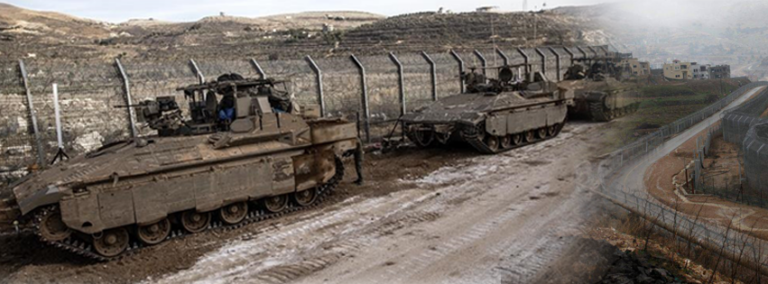
Al-Marsad presented an overview of its work over the recent period, with discussions focusing on several key areas, foremost among them the documentation of large-scale violations committed by the occupying power against civilians and infrastructure in the disengagement zone (the buffer zone), which Israeli forces occupied following the fall of the Assad regime on 8 December 2024.
Al-Marsad also reviewed the detailed periodic reports it prepares in this regard, documenting extrajudicial killings, arbitrary arrests and enforced disappearances, destruction of property, home demolitions, restrictions on freedom of movement and travel, denial of residents’ access to their lands, ongoing incursions into villages and the establishment of checkpoints, as well as the mistreatment and harassment of Syrian civilians in the area through practices aimed at pressuring them to leave their villages.
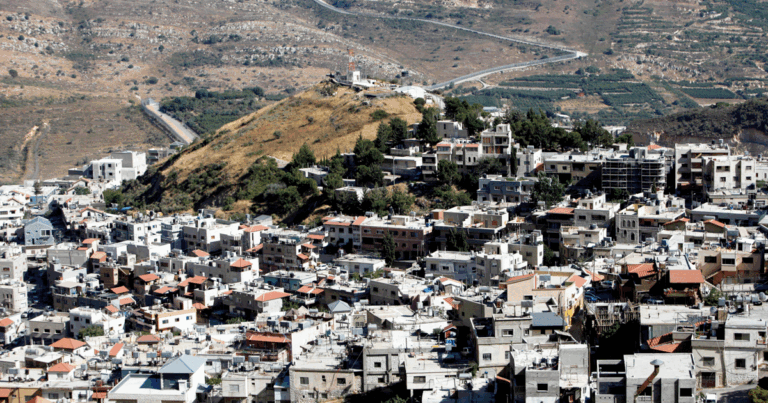
The repeated violations carried out by the Israeli occupation affect civilians and their property both inside and outside the buffer zone, causing significant damage to the environment and infrastructure in the area. Over the past year, Syrians have recorded daily incursions into villages in the governorates of Quneitra, Daraa, and rural Damascus, involving the establishment of temporary checkpoints, the periodic stopping and searching of civilians’ homes, photographing residents, and collecting their personal data.
Civilians have also been subjected to various forms of harassment and to violations of their rights to property and to a dignified life, as the occupation has continued to confiscate their agricultural equipment and herds of cattle and sheep, as well as to burn and bulldoze agricultural lands they own.
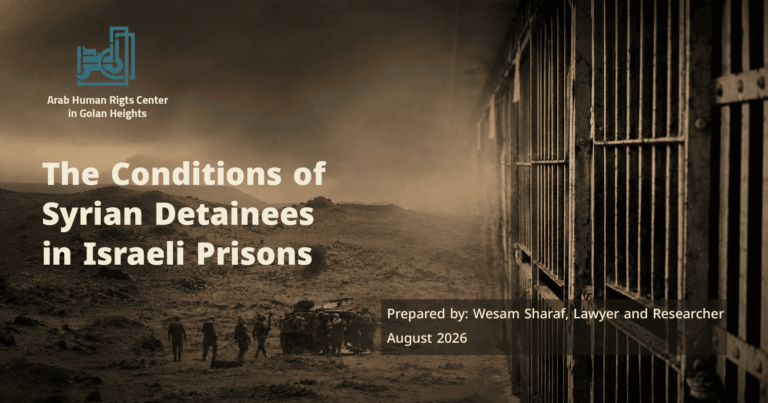
Among the most prominent issues addressed in the discussion was the issue of Syrian detainees in Israeli occupation prisons, and the obstacles imposed by the occupation authorities on communicating with them, determining the reasons for and locations of their detention, and providing them with legal representation.
The ongoing violations affecting detainees and the communication obstacles highlight the urgent need for action. This should inspire the audience to advocate for detainees’ rights and international legal protections.
The Red Cross delegation explained that it has been visiting the recently occupied areas through its representatives in Damascus, monitoring the situation and working to provide possible humanitarian assistance to Syrian residents there. It noted that the information presented by Al-Marsad closely aligns with the Red Cross’s own database, particularly regarding Syrian detainees and the difficulty of communicating with them due to the occupation authorities’ refusal to disclose their places and conditions of detention or to allow visits and access to assess their situation.
Al-Marsad and the International Committee of the Red Cross will continue communicating in the hope of overcoming these obstacles and providing possible legal assistance to these detainees—basic rights guaranteed under international law and the relevant Geneva and Hague Conventions.
Al-Marsad also inquired whether there had been any change regarding links between the occupied Golan and the rest of Syrian territory, including the right to visit Syria, enroll in its universities, and allow separated families to visit their relatives—connections that were cut off in early 2011. The delegation clarified that the renewal of these ties between the residents of the Golan and their homeland, Syria, remains impossible due to the occupation authorities’ opposition.